


Which is Best for Swift Callers - Dawn or Dusk?
What's the Objective?
For any swift conservation project, the goal is “recruitment”—persuading a young, non-breeding bird to enter a box and claim it for the following year. Remember older, breeding birds have already found a nest box and aren’t scouting. While it may seem tempting to play attraction calls whenever swifts are visible in the sky, a targeted approach based on their daily habits yields much better results.
The Logic of the Morning Prospector
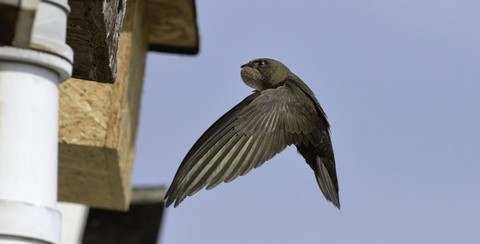
The most important birds for your colony are the “prospectors.” These are usually one- or two-year-old birds that are not yet breeding. Their primary mission during the summer months is to find a safe, established nesting site for the future.
Research from major conservation bodies shows that these birds are most focused on home-hunting in the early morning, specifically between 6:30 AM and 10:30 AM.
- Higher Investigation Rates: During these hours, young birds are more likely to “bang” or “tag” the entrance of a nest box. This is a deliberate, investigative behavior.
- Lower Social Noise: In the morning, the sky is less crowded with “Screaming Parties.” This makes your Tweeet caller a much clearer signal for a bird that is actively searching for a vacancy.
The Evening "Screaming Party" vs. Actual Nesting
It is a common misconception that the loud, low-flying groups seen at sunset are the best birds to target. While these evening displays are impressive, they are primarily a social activity for birds that already have a home or are preparing to fly to high altitudes to sleep on the wing. Most swifts spend the night at altitudes of up to 3,000 meters. By sunset, their focus shifts from “looking for a house” to “preparing for flight.”
Other Factors
You may also get on better with your neighbours with dawn calls. In the morning, particularly is spring your swift calls will be part of the normal dawn chorus and less obtrusive. At dusk, things are quieter and the calls maybe more noticable and subject to comment. On a bit of a nerdy note, the temperature at dawn is lower than at dusk and humidity higher. Sound travels further in these conditions and is marginally louder at distance increasing the chances of attracting a passing scout.
Reliable Sources for Further Reading
If you would like to look deeper into the data behind these recommendations, these organizations provide the most reliable field evidence in the UK and Europe:
- Action for Swifts: Expert technical advice on attraction timing. http://actionforswifts.blogspot.com/p/attraction-calls.html
- Swift Conservation (UK): Detailed manuals on establishing new colonies. https://www.swift-conservation.org/AttractingSwifts.htm
- BirdWatch Ireland: Guidelines on using callers to save the species. https://birdwatchireland.ie/app/uploads/2019/10/Saving-Swifts-Guide.pdf
- The BTO (British Trust for Ornithology): Information on swift behavior and Red List status. https://www.bto.org/our-science/projects/swifts